Verizon Business Managed Security puts a team of over 9,000 cybersecurity professionals between your organization and the threats targeting it. The 24/7 Security Operations Center monitors network traffic, analyzes endpoint behavior, manages firewalls and responds to incidents before damage spreads.
Threat intelligence from the annual Verizon Data Breach Investigations Report feeds directly into detection rules that protect enterprise clients. This is not generic security tooling. It is an operational capability built on data from real breaches across every industry.
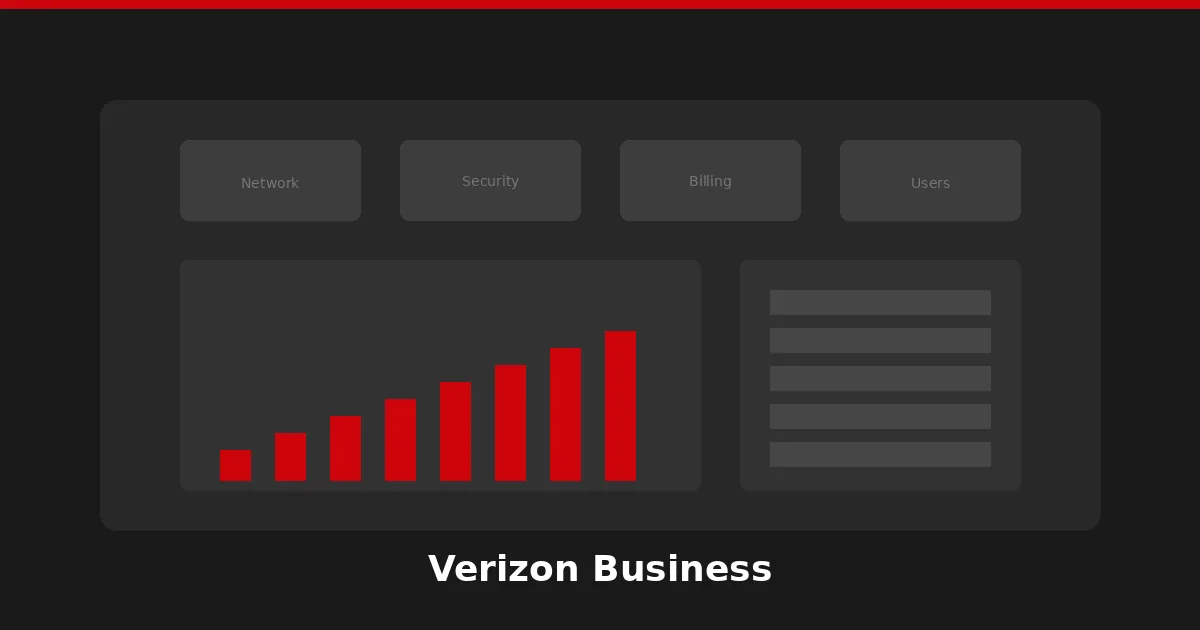
Verizon Business Managed Security protects enterprise networks, endpoints, cloud workloads and applications through an integrated platform operated by one of the largest cybersecurity teams in the commercial sector. Core services include managed firewall administration across Palo Alto, Fortinet and Check Point devices, endpoint detection and response with remote isolation capabilities, DDoS mitigation handling volumetric attacks exceeding 15 Tbps, SIEM log aggregation and correlation processing over 1 trillion security events annually, and compliance monitoring for HIPAA, PCI DSS, SOX, NIST CSF and CMMC frameworks. The SOC operates from geographically distributed facilities to ensure continuity during regional disruptions.

Layered defense from network perimeter to endpoint, monitored and managed by the Verizon Business SOC.
The Verizon Business SOC never closes. Analysts work in shifts across geographically separated facilities so that a regional event never interrupts monitoring coverage. Each analyst undergoes continuous training on emerging attack techniques, and the team maintains certifications including CISSP, GIAC and vendor-specific qualifications for every firewall and endpoint platform they manage.
When the SOC detects suspicious activity, the response follows a structured playbook. Level 1 analysts triage alerts and filter false positives. Level 2 analysts investigate confirmed threats, determine scope and initiate containment. Level 3 analysts handle advanced persistent threats, conduct forensic analysis and coordinate with law enforcement when criminal activity is involved.
The CISA cyber threat advisories inform the detection rules that Verizon Business SOC analysts deploy. When CISA publishes a new advisory about an active exploitation campaign, the SOC updates detection signatures across all managed client environments within hours, often before most organizations are aware the threat exists.
Secure Cloud Workloads
Verizon Business manages firewall infrastructure from leading vendors including Palo Alto Networks, Fortinet and Check Point. Management encompasses rule base administration, firmware updates, policy optimization and log analysis. Enterprise clients retain full visibility into their firewall configuration while the Verizon Business team handles the operational burden.
Rule base reviews happen quarterly. The security team analyzes existing rules, identifies overly permissive access lists, flags unused rules and recommends changes that tighten the security posture without disrupting business operations. This proactive maintenance prevents the rule base bloat that accumulates over years and creates hidden vulnerabilities.
Network segmentation consulting helps organizations isolate sensitive systems from general user traffic. Properly segmented networks limit lateral movement when an attacker gains initial access, which reduces the blast radius of a breach. The Verizon Business Data Breach Investigations Report consistently identifies lateral movement as a key factor in the severity of successful attacks.
Secure Your SD-WAN
Distributed denial of service attacks can overwhelm internet circuits and render business applications unreachable. Verizon Business DDoS mitigation operates at the network backbone level, detecting and scrubbing malicious traffic before it reaches the customer's edge. The system handles volumetric attacks exceeding 15 terabits per second, which represents capacity that individual organizations cannot replicate with on-premises equipment.
Detection uses flow analysis, behavioral baselines and machine learning to distinguish attack traffic from legitimate surges. When a retailer experiences a genuine traffic spike on Black Friday, the system recognizes the pattern differs from an attack and allows the traffic through. When a botnet launches a UDP flood, the system identifies the signatures and routes traffic through scrubbing infrastructure within seconds.
The FCC electronic comment filing system has documented the growing scale of DDoS threats in regulatory proceedings on network resilience. Verizon Business participates in these proceedings and applies the findings to strengthen mitigation capabilities for all enterprise clients.
Protect Business Internet
Endpoint detection and response from Verizon Business deploys lightweight agents on workstations, servers, laptops and mobile devices. These agents monitor process execution, file system changes, registry modifications, network connections and user behavior. When an agent detects activity matching known attack patterns or statistically anomalous behavior, it alerts the SOC and can automatically isolate the device from the network to prevent lateral spread.
Forensic capabilities allow SOC analysts to examine a compromised endpoint remotely. They can view running processes, inspect file hashes, check network connections and collect memory dumps without needing physical access to the machine. This remote forensic capability accelerates incident response, especially for organizations with distributed workforces.
The Verizon Business SIEM platform aggregates log data from firewalls, endpoints, servers, cloud workloads, identity providers and custom applications. Correlation rules process over 1 trillion events annually, identifying attack patterns that span multiple data sources. A single compromised credential, for example, generates distinct log entries in the identity provider, the VPN gateway, the file server and the cloud platform. The SIEM correlates these entries into a single incident timeline.
Dashboards display security posture metrics including mean time to detect, mean time to respond, alert volume trends, incident severity distribution and compliance control status. Monthly executive reports summarize the security landscape for leadership teams that need visibility without operational detail.
Verizon Business Managed Security supports compliance with HIPAA for healthcare, PCI DSS for organizations processing payment cards, SOX for publicly traded companies, NIST Cybersecurity Framework for voluntary adoption, and CMMC for defense industrial base contractors. The platform maps security controls to each framework, identifies gaps and generates evidence packages for auditors.
Compliance dashboards show real-time control effectiveness. If a logging requirement specifies that authentication events must be retained for 12 months, the dashboard confirms that logs are being collected, stored and accessible for the required duration. If a control fails, an alert notifies both the security team and the compliance team so remediation begins immediately.
Select the security tier that matches your organization's threat landscape, compliance requirements and response time expectations.
| Tier | Services Included | Response Time (Containment) |
|---|---|---|
| Essential | Managed firewall, SIEM monitoring, quarterly reviews | 4 hours |
| Advanced | All Essential + EDR, DDoS mitigation, vulnerability scanning | 2 hours |
| Premium | All Advanced + threat hunting, compliance reporting, dedicated analyst | 1 hour |
| Enterprise | All Premium + red team exercises, CISO advisory, custom playbooks | 30 minutes |
Call (800) 922-0204 to schedule a security assessment or discuss managed security services for your organization.
Get a Security Assessment View All SolutionsThe Verizon Business SOC monitors network traffic, firewall logs, endpoint telemetry, DNS queries, email security events and cloud workload activity around the clock. Over 9,000 cybersecurity professionals analyze alerts, investigate incidents, contain threats and provide detailed post-incident reports. The SOC operates from geographically distributed facilities to maintain coverage during any regional disruption.
Verizon Business DDoS mitigation uses upstream scrubbing centers that detect and filter malicious traffic before it reaches the customer network. The system handles volumetric attacks exceeding 15 Tbps, protocol-based attacks and application-layer attacks. Mitigation activates automatically within seconds when attack signatures are detected. Clean traffic passes through normally while malicious packets are dropped.
Verizon Business Managed Security supports HIPAA, PCI DSS, SOX, NIST CSF, ISO 27001 and CMMC compliance requirements. The platform generates compliance reports, maintains audit trails, enforces access controls and monitors for policy violations. Dedicated compliance specialists assist with audit preparation and can provide evidence packages directly to auditors during examinations.
Verizon Business EDR deploys lightweight agents on workstations, servers and mobile devices that continuously monitor for suspicious behavior. When a threat is detected, the SOC team can isolate the affected endpoint remotely, collect forensic data and initiate remediation without requiring on-site access. EDR is included in the Advanced, Premium and Enterprise security tiers.
Response times depend on the service tier. The Essential tier provides containment within 4 hours. The Advanced tier reduces containment to 2 hours. The Premium tier guarantees containment within 1 hour with a dedicated incident commander. The Enterprise tier targets containment within 30 minutes and includes custom response playbooks tailored to your environment.
Layer security across your entire Verizon Business infrastructure with these complementary services.
Dedicated fiber circuits with built-in DDoS mitigation and managed firewall options from Verizon Business.
Integrate security policies directly into SD-WAN routing rules for consistent protection across all branch locations.
Extend managed security monitoring to cloud workloads running on AWS, Azure, Google Cloud and Verizon Business IaaS.
Secure voice and video communications with encryption enforcement and access controls managed by the SOC.
Protect VoIP infrastructure from toll fraud, SIP attacks and eavesdropping with managed voice security services.
Isolate critical operations on private 5G and MPLS networks with layered security controls and dedicated monitoring.
 Verizon