Verizon Business edge computing positions server infrastructure at the perimeter of the network, physically close to where data originates. Applications that require single-digit millisecond response times run on edge nodes distributed across metro areas rather than in distant cloud data centers hundreds of miles away.
The platform supports containerized workloads through Kubernetes, integrates with AWS Wavelength and Microsoft Azure Edge Zones, and delivers compute capacity ranging from lightweight inference engines to GPU-accelerated machine learning pipelines.
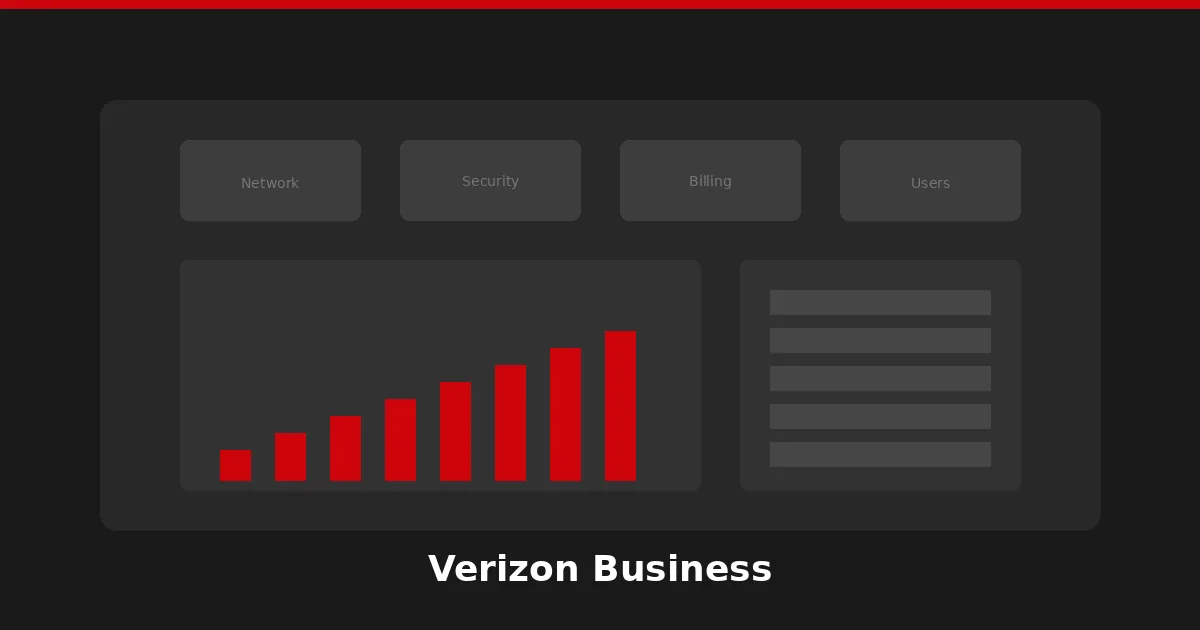
Verizon Business operates edge computing nodes at cell tower locations, local data centers and customer premises across major US metro markets. The edge platform provides three deployment tiers: metro edge with sub-10-millisecond latency for city-wide applications, near edge with sub-15-millisecond latency for regional workloads, and on-premises edge with sub-5-millisecond latency for facility-specific use cases. All tiers run Kubernetes-based container orchestration that accepts standard Docker images and integrates with existing CI/CD pipelines. GPU-equipped nodes support computer vision, natural language processing and real-time inference workloads. Storage options include NVMe flash for high-IOPS applications and object storage for video and image data. The platform processed over 2 billion edge transactions daily across active deployments as of early 2026.

Compute infrastructure where your data is generated, not where a cloud provider happens to operate a region.
Verizon Business metro edge nodes sit at aggregation points within the cellular network, typically co-located with cell tower equipment or positioned at local interconnection facilities. When a connected device sends data, the packet reaches the edge node in under 5 milliseconds of network transit. Application processing adds a few more milliseconds, keeping total round-trip latency below 10 milliseconds for most workloads.
Compare that to centralized cloud: a request from a device in Dallas to a cloud region in Virginia adds 40 to 60 milliseconds of network latency before the application even begins processing. For a computer vision system inspecting products on a fast-moving assembly line, that 50-millisecond penalty means the item has already moved past the inspection point before the system can flag a defect.
Metro edge nodes support a range of compute profiles. Lightweight containers running inference models consume as little as 2 vCPUs and 4 GB of RAM. GPU-accelerated workloads access NVIDIA T4 or A10G accelerators for real-time video analytics, 3D rendering and language model inference. Storage attaches locally as NVMe flash, eliminating the latency penalty of network-attached storage.
5G + Edge Solutions
When even metro edge latency is too high, Verizon Business installs compute nodes directly inside the customer's building. On-premises edge servers connect to the facility's private 5G network or wired LAN, keeping all data within the building perimeter. Round-trip latency drops below 5 milliseconds because traffic never leaves the premises.
Manufacturing plants use on-premises edge for robotic control loops that require sub-3-millisecond response times. Hospitals run imaging analysis on local edge nodes to provide radiologists with AI-assisted annotations in real time during procedures. Distribution centers process barcode and RFID data from thousands of handheld scanners simultaneously without overwhelming a distant cloud endpoint.
Verizon Business manages the on-premises hardware remotely. Firmware updates, security patches, capacity monitoring and fault detection all happen through the same management platform used for metro edge nodes. The customer's facilities team provides power, cooling and rack space; Verizon Business handles everything else. The Department of Energy Building Technologies Office publishes guidelines for data center cooling efficiency that Verizon Business references when specifying environmental requirements for on-premises edge installations.
Verizon Business edge computing integrates natively with AWS Wavelength and Microsoft Azure Edge Zones. Developers who already build on AWS can deploy the same EC2 instances, ECS containers and Lambda functions to Wavelength zones embedded within the Verizon Business 5G network. The application code stays the same; only the deployment target changes.
Azure Edge Zones provide a similar capability for Microsoft-centric organizations. Azure Kubernetes Service runs on edge nodes managed jointly by Verizon Business and Microsoft, with the same tooling, monitoring and security policies that apply to central Azure regions. Hybrid architectures split workloads between edge and cloud: latency-sensitive inference runs at the edge while model training and long-term storage remain in the central cloud region.
This split-tier approach keeps costs manageable. Edge compute is more expensive per unit than centralized cloud because the infrastructure is distributed across many small sites rather than concentrated in a few massive data centers. By running only the latency-critical portion at the edge and everything else in the cloud, enterprises pay edge pricing for the 10% to 20% of processing that actually needs low latency. The NIST cloud computing framework defines the architectural patterns that guide this distributed deployment strategy.
IoT Solutions
A national retailer deployed Verizon Business edge computing across 200 stores to power computer vision checkout systems. Cameras above each lane capture item images that an inference model running on the metro edge node identifies in under 15 milliseconds. The system matches items against a product database of 50,000 SKUs without sending any images to a distant cloud, which keeps checkout speed fast and reduces bandwidth costs by 80% compared to a cloud-only architecture.
An automotive manufacturer uses on-premises edge nodes connected to a Verizon Business private 5G network for real-time weld inspection. High-speed cameras capture images of each weld at 1,000 frames per second. The edge node runs a convolutional neural network that classifies each weld as pass or fail within 4 milliseconds. Defective welds trigger an immediate halt to the robotic arm. Before edge computing, inspection results arrived 200 milliseconds after the weld completed, too late to prevent the robot from moving to the next position.
A healthcare system processes CT scan images on edge nodes located within each hospital rather than sending gigabytes of imaging data to a central cloud. Radiologists see AI-highlighted regions of concern within seconds of the scan completing. The on-premises edge approach also satisfies data residency requirements that prevent patient imaging from leaving the hospital network.
The Verizon Business edge platform runs on Kubernetes with support for Helm charts, custom resource definitions and standard ingress controllers. Developers package applications as container images, push to the edge container registry, and deploy using familiar tools. A CI/CD pipeline that builds and deploys to AWS EKS can target edge nodes with a configuration change rather than a code rewrite.
Observability tools provide metrics, logs and traces from edge workloads through Prometheus, Grafana and OpenTelemetry integrations. Developers monitor CPU utilization, memory consumption, request latency and error rates across all edge nodes from a centralized dashboard. Alerts trigger when any metric crosses a defined threshold, and auto-scaling policies adjust container replica counts based on demand.
Persistent storage at each edge node uses NVMe SSDs for low-latency database workloads and object storage for video, image and log data. Data replication between edge nodes and the central cloud runs on configurable schedules. Frequently accessed data stays local; historical archives synchronize to cloud storage during off-peak hours to manage bandwidth consumption.
Each Verizon Business edge node operates within a hardened environment. Physical security at cell tower and data center sites includes biometric access controls, CCTV monitoring and 24/7 security staff. Logical security includes encrypted storage at rest, TLS 1.3 for data in transit, and container image signing that prevents unauthorized code from executing on edge infrastructure.
Network segmentation isolates each customer's edge workloads from other tenants sharing the same physical hardware. Kubernetes namespaces, network policies and resource quotas enforce tenant boundaries. Verizon Business holds SOC 2 Type II attestation for its edge computing operations, and the infrastructure supports workloads subject to HIPAA, PCI DSS and FedRAMP compliance frameworks.
Specifications for each edge computing deployment tier available through Verizon Business, including latency targets, compute capacity and storage options.
| Edge Tier | Application Latency | Compute Capacity | Storage Options | Deployment Location |
|---|---|---|---|---|
| Metro Edge | < 10 ms | Up to 96 vCPUs, 384 GB RAM, GPU optional | NVMe SSD, object storage | Cell tower aggregation sites, metro data centers |
| Near Edge | < 15 ms | Up to 64 vCPUs, 256 GB RAM | NVMe SSD, block storage | Regional data centers, interconnection hubs |
| On-Premises Edge | < 5 ms | Up to 128 vCPUs, 512 GB RAM, GPU available | NVMe SSD, local object storage | Customer facility, managed by Verizon Business |
| AWS Wavelength | < 10 ms | EC2 instance types (c5, r5, g4dn) | EBS volumes, S3 integration | Verizon Business 5G network edge |
| Azure Edge Zones | < 12 ms | Azure VM sizes (D-series, N-series) | Managed disks, Azure Blob | Verizon Business metro network locations |
Connect with a Verizon Business edge computing architect to evaluate metro, near or on-premises edge options for your latency-sensitive applications. Call (800) 922-0204.
Schedule a Consultation Back to HomeMobile edge computing from Verizon Business places compute servers, storage and networking equipment at the edge of the cellular network, physically close to end users and connected devices. Instead of sending data hundreds of miles to a centralized cloud data center, applications process information locally at the edge node. This reduces round-trip latency to under 10 milliseconds for applications that cannot tolerate delay.
Verizon Business edge computing delivers application-level latency between 5 and 15 milliseconds depending on the edge tier and geographic proximity. Metro edge nodes achieve sub-10-millisecond latency for devices within the same metro area. On-premises edge installations reduce latency below 5 milliseconds. These figures compare to 50 to 100 milliseconds for the same applications hosted in centralized cloud regions.
The Verizon Business edge platform runs containerized workloads on Kubernetes infrastructure. Developers package applications as Docker containers, push them to the edge registry, and deploy using standard kubectl commands or CI/CD pipelines. The platform integrates with AWS Wavelength and Microsoft Azure Edge Zones, allowing existing cloud applications to extend to the edge with configuration changes rather than code rewrites.
Computer vision quality inspection in manufacturing, augmented reality maintenance guidance for field technicians, autonomous vehicle coordination, real-time video analytics for security, interactive gaming and live event streaming all benefit from edge computing. Any application where 50 milliseconds of additional latency degrades the user experience or makes the system unusable is a strong candidate for edge deployment.
Verizon Business offers on-premises edge nodes that install directly within a customer's facility. These nodes connect to the Verizon Business network through private circuits or 5G backhaul, providing sub-5-millisecond latency for applications that must run inside the building. On-premises edge is ideal for manufacturing floors, hospital operating rooms and warehouse automation systems where data must not leave the facility.
Connectivity and platform services that pair with edge computing for complete distributed application architectures.
Ultra Wideband and private 5G networks that provide the low-latency wireless connectivity edge applications require.
Connected sensors and asset tracking platforms that generate the data edge computing nodes process in real time.
MPLS and dedicated circuits for secure backhaul between edge nodes and centralized data centers or cloud environments.
High-bandwidth Ethernet connectivity for edge node backhaul and data synchronization to central cloud storage.
Threat monitoring and container security that protects edge workloads, APIs and data at distributed edge locations.
Central cloud infrastructure that handles batch processing, model training and long-term storage alongside edge deployments.
 Verizon