Verizon Business IoT connects physical assets, vehicles, infrastructure and sensors to a centralized analytics platform using cellular, LPWAN and 5G connectivity. The result is operational visibility that transforms guesswork into data-driven decisions across fleet operations, supply chains, facilities and field service organizations.
From a single GPS tracker on a delivery van to 50,000 environmental sensors across a national utility grid, the Verizon Business IoT platform scales without requiring customers to manage connectivity infrastructure themselves.
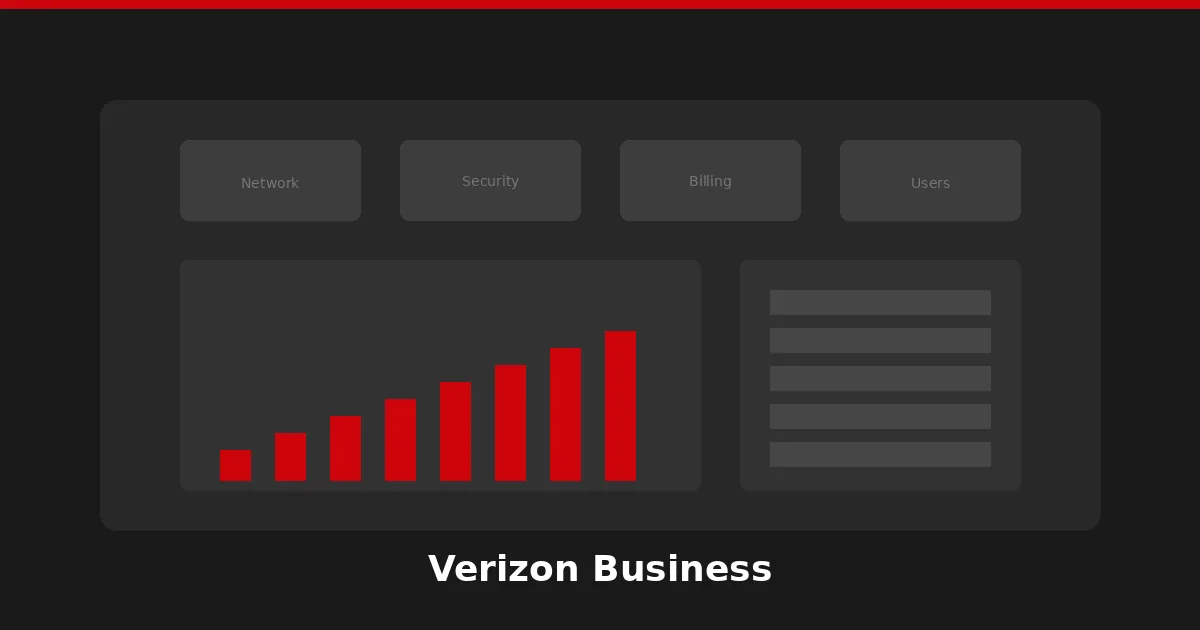
Verizon Business manages over 25 million IoT connections across its cellular network, making it one of the largest IoT platforms in the United States. The ThingSpace management portal handles device provisioning, connectivity monitoring, firmware updates and data routing for deployments ranging from dozens to millions of endpoints. Connectivity options span LTE Cat-M1 for low-power sensors with multi-year battery life, NB-IoT for devices in deep-indoor or underground locations, standard 4G LTE for video and high-bandwidth applications, and 5G for industrial use cases requiring sub-10-millisecond latency. Enterprise IoT analytics process billions of data points daily, feeding machine learning models that detect anomalies, predict maintenance needs and optimize operational workflows across connected assets.
Real-time location intelligence and operational analytics for vehicles, equipment and high-value assets across your entire operation.
Verizon Business asset tracking combines compact GPS hardware with cellular data transmission to report location, motion, temperature and tampering status at configurable intervals. Devices range from solar-powered outdoor trackers for construction equipment to coin-sized indoor beacons for warehouse inventory. Battery-powered units on Cat-M1 connectivity last 3 to 7 years depending on reporting frequency.
The tracking platform displays all assets on a map with filtering by type, status, zone and alert condition. Geofencing triggers notifications when an asset enters or leaves a defined area. Motion alerts detect unexpected movement of equipment that should be stationary. Temperature monitoring on refrigerated trailers sends immediate alerts if readings drift outside acceptable ranges.
The Department of Energy Vehicle Technologies Office has published research showing that GPS-based fleet optimization reduces fuel consumption by 10% to 15% for commercial vehicle operators, a finding consistent with results reported by Verizon Business fleet management clients.
Edge Computing for IoT
The Verizon Business fleet management platform goes beyond location tracking to provide complete operational intelligence for vehicle fleets. OBD-II diagnostic readers capture engine data including fuel consumption, idle time, diagnostic trouble codes and odometer readings. Accelerometers detect hard braking, rapid acceleration and sharp cornering events that correlate with accident risk.
Driver scorecards aggregate these metrics into individual performance ratings. Fleet managers identify drivers who need coaching before risky behavior leads to an accident or a citation. Route optimization algorithms factor in traffic conditions, delivery windows, vehicle capacity and driver hours-of-service limits to generate the most efficient daily routes.
Electronic logging device compliance comes built into the platform. Hours-of-service tracking runs automatically, alerts drivers before they approach regulatory limits, and generates the reports that DOT inspectors require during roadside checks. This integrated approach eliminates the need for separate ELD hardware and subscription.
Verizon Business IoT extends beyond vehicles into buildings, utilities and industrial equipment. Environmental sensors monitor temperature, humidity, air quality and water levels in facilities. Vibration sensors on industrial machinery detect bearing wear, imbalance and misalignment months before failure occurs. Power monitoring devices track energy consumption at the circuit level across entire building portfolios.
Smart infrastructure deployments connect traffic signals, streetlights, parking meters and environmental monitors for municipal governments. Water utilities use pressure and flow sensors throughout distribution networks to detect leaks before they become main breaks. Electric utilities monitor transformer temperatures, conductor sag and vegetation encroachment along transmission corridors.
The NIST Smart Grid program develops interoperability standards that Verizon Business IoT platforms reference when integrating with utility SCADA systems and distribution management platforms. This standards alignment ensures that IoT sensor data flows seamlessly into existing operational technology environments.
Private Network Connectivity
ThingSpace serves as the central nervous system for Verizon Business IoT deployments. The platform handles device lifecycle management from initial SIM activation through firmware updates and eventual decommissioning. Bulk provisioning tools let administrators activate thousands of SIM cards simultaneously, assign them to device groups, apply connectivity plans and set usage thresholds in a single batch operation.
API access enables integration with enterprise systems. A warehouse management system can query ThingSpace for the real-time location of every tracked pallet. A maintenance management platform can receive diagnostic alerts from connected equipment and automatically generate work orders. A business intelligence tool can pull historical sensor data for trend analysis without manual export.
Connectivity management within ThingSpace includes real-time usage dashboards, automatic suspension for devices that exceed data caps, pooled data plans that share bandwidth across device groups, and international roaming profiles for assets that cross borders. Administrators see exactly how much data each device consumes, identify devices with abnormal usage patterns, and adjust plans to avoid overage charges.
Every Verizon Business IoT device connects through a private APN that isolates IoT traffic from general internet traffic on the cellular network. SIM-based authentication prevents unauthorized devices from joining the IoT network. Data transmissions use TLS encryption between the device and the ThingSpace platform.
For organizations with heightened security requirements, Verizon Business offers private network IoT configurations where device traffic never touches the public internet. Data routes from the device through the cellular network directly into the customer's private MPLS or Ethernet infrastructure. This closed-loop architecture meets the security requirements of defense contractors, healthcare organizations and financial institutions.
Firmware over-the-air update capabilities allow Verizon Business to patch security vulnerabilities across entire device fleets without physical access. Update campaigns can target specific device models, firmware versions or geographic regions. Staged rollouts apply updates to a small percentage of devices first, then expand to the full fleet after validation.
Raw sensor data flowing into the Verizon Business analytics engine transforms into actionable intelligence through statistical modeling and machine learning. Predictive maintenance algorithms learn the normal operating signatures of connected equipment, then flag deviations that indicate developing faults. A compressor showing a gradual increase in vibration amplitude over six weeks receives a maintenance alert well before catastrophic failure.
Energy optimization models analyze building sensor data alongside weather forecasts, occupancy patterns and utility rate schedules to recommend HVAC adjustments that reduce energy costs. Fleet analytics correlate driver behavior, route selection and vehicle condition to identify the specific factors driving fuel consumption at each operating location.
Overview of IoT platform capabilities by deployment type, including connectivity options, device scale and analytics features available through Verizon Business.
| Platform | Connectivity | Devices Supported | Analytics Capabilities | Primary Industry |
|---|---|---|---|---|
| Asset Tracking | Cat-M1, LTE, 5G | GPS trackers, beacons, tags | Location history, geofencing, dwell time | Logistics, construction, healthcare |
| Fleet Management | LTE, 5G | OBD-II readers, dashcams, ELD | Route optimization, driver scoring, fuel analysis | Transportation, delivery, field service |
| Smart Infrastructure | Cat-M1, NB-IoT, LTE | Environmental sensors, meters, controllers | Anomaly detection, threshold alerts, trend analysis | Utilities, municipalities, facilities |
| Industrial IoT | 5G, Private 5G, LTE | Vibration sensors, PLCs, cameras | Predictive maintenance, quality inspection, OEE | Manufacturing, energy, mining |
| Connected Health | Cat-M1, LTE | Medical devices, wearables, monitors | Patient alerts, compliance tracking, usage reports | Healthcare, senior living, clinical trials |
Discuss your asset tracking, fleet management or smart infrastructure needs with a Verizon Business IoT specialist. Call (800) 922-0204 or request a consultation.
Talk to IoT Sales Back to HomeVerizon Business IoT solutions support LTE Cat-M1 for battery-powered sensors with multi-year battery life, NB-IoT for deep-indoor and underground coverage, standard 4G LTE for high-bandwidth devices like cameras, and 5G for industrial applications requiring sub-10-millisecond latency. The ThingSpace platform manages device provisioning, connectivity and data routing across all connection types from a single interface.
Verizon Business fleet management combines GPS tracking hardware, cellular connectivity and cloud-based analytics. The platform provides real-time vehicle location, route optimization, driver behavior scoring, fuel consumption tracking and maintenance scheduling. Fleet managers access dashboards showing all vehicles with alerts for speeding, geofence violations and diagnostic trouble codes. Integrated ELD compliance tracks hours-of-service automatically.
The Verizon Business ThingSpace platform manages deployments from a handful of devices to millions. Enterprise accounts receive bulk SIM provisioning, automated device onboarding, group policy management and usage-based billing that scales with deployment size. API integrations allow existing enterprise systems to pull location data, receive sensor alerts and manage device configurations programmatically.
Verizon Business IoT analytics include real-time dashboards, historical trend analysis, anomaly detection, predictive maintenance algorithms and custom reporting. Data from connected sensors feeds into the analytics engine where machine learning models identify patterns in equipment behavior, energy usage, vehicle performance and environmental conditions. Configurable alerts trigger when readings exceed thresholds, enabling proactive response before problems escalate.
Connectivity and compute solutions that enhance IoT deployments with additional network and processing capabilities.
Ultra Wideband and private 5G connectivity for high-density IoT deployments in warehouses, factories and campuses.
Process IoT data at the network edge for real-time analytics, computer vision and autonomous system responses.
MPLS and dedicated circuits for secure IoT data backhaul that keeps sensor traffic off the public internet entirely.
International connectivity for IoT deployments that span borders, with global SIM management and roaming profiles.
Endpoint protection and threat monitoring that secures IoT devices against unauthorized access and data exfiltration.
High-bandwidth backhaul for IoT gateways aggregating data from thousands of sensors at distribution hubs and data centers.
 Verizon